How to Use EHR Data to Improve Your Residents' Quality of Life

Electronic health records (EHRs) have fundamentally changed how assisted living communities document care. But even with all the data now at providers’ fingertips, many teams are still focused only on meeting compliance. Instead, they should be using that information to improve residents’ day-to-day experiences.
The truth is, an assisted living EHR isn't just digital filing cabinets—they’re powerful tools for enhancing residents’ quality of life. When health and personal datasets are structured, analyzed, and applied proactively, they can drive meaningful improvements across the care spectrum.
From spotting early signs of decline to personalizing daily routines, the ongoing insights within your assisted living EHR can help your community deliver more responsive, resident-centered support.
Why "Quality of Life" Needs to Be a Core Outcome in Assisted Living
Quality of life is more than a nice-to-have in assisted living. It’s the standard by which residents and families measure your care. It encompasses a range of factors that shape a resident’s daily experience and long-term well-being.
Here are the core dimensions of quality of life in assisted living (and how data can help improve them):
- Physical health and function: Mobility, personal care, and health management are essential to a resident’s independence. Data from assisted living EHRs, such as ADL levels, vital signs, and fall reports help teams monitor and support physical well-being.
- Emotional and mental well-being: Anxiety, depression, or withdrawal often show up subtly. Consistent mood tracking and behavior notes can highlight changes that prompt timely mental health support.
- Cognitive health and safety: Memory-related challenges, like confusion or wandering, require structured observation. Data from an assisted living EHR helps teams notice patterns and ensure the right safety measures are in place.
- Social and lifestyle engagement: Activity participation, social interaction, and dining involvement reflect how connected residents feel. Engagement logs can reveal who may need more support.
- Autonomy and personal preferences: When residents' routines and preferences are honored, they feel more in control. Assisted living EHR data fields for waking hours, food choices, or daily rituals help teams personalize care and respond to change.
Each of these categories is measurable, and with the right assisted living EHR data strategy, communities can begin to proactively enhance every one.
The Traditional Use of the Assisted Living EHR — and What’s Often Overlooked
Historically, software for assisted living has been viewed as tools to check boxes: chart medications, document incidents, record ADLs, and satisfy regulatory requirements.
Those are all critically important use cases, but it’s just one layer.
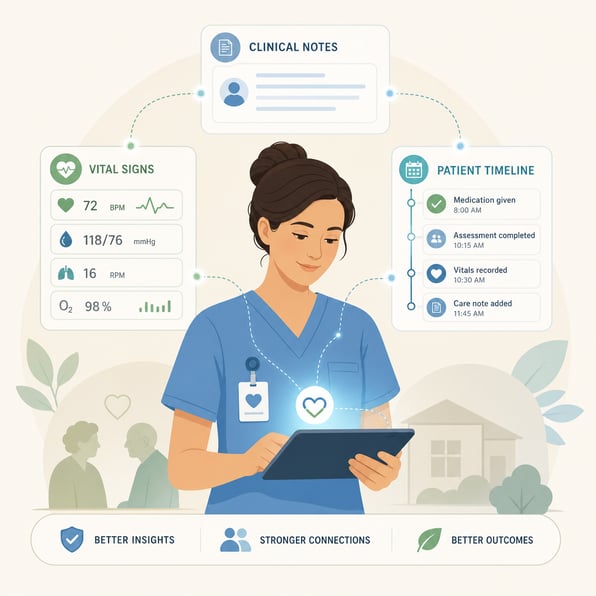
Here’s what’s often overlooked: the software collects structured information in real time. When you review those metrics over days or weeks, they can reveal patterns others might miss, like gradual weight loss, changes in mood, skipped activities, or repeated refusals of care. These small shifts can be early signs of how a resident is really feeling.
When teams view the assisted living software not just as a compliance tool, but a resident insight platform, they can turn record keeping into quality-of-life improvement.
Key Ways an Assisted Living Software EHR Can Be Used to Improve Quality of Life
Your data isn’t just for documentation. Here are several ways assisted living EHR systems can be used proactively to improve resident outcomes and well-being.
Early Detection of Decline or Change
Tracking resident data across time allows teams to identify changes before they escalate. Subtle trends like reduced appetite or missed activities may signal early physical or cognitive decline. Faster intervention in those scenarios leads to better preventative care and fewer hospitalizations.
Personalized Daily Routines and Preferences
Assisted living EHR can store resident preferences around waking times, meal choices, bathing schedules, and favorite activities. When those preferences are honored consistently, residents feel more at home and in control.
The more consistently that information is recorded and referenced by staff, the more personalized your care feels.
Proactive Social Engagement
Notes on participation, mood, and refusals can help the activity team identify residents who may be withdrawing. They can then create custom plans to re-engage them socially.
For example, a resident who skips group exercise but enjoys music may benefit from targeted one-on-one engagement scheduled around their preferences.
Behavior and Mood Monitoring to Support Mental Health
Behavior logs and CNA shift notes often hold early clues to mental health struggles like depression or anxiety. With enough data, patterns like repeated agitation or increased resistance to care can prompt mental health screenings or family conversations before a resident’s health is at risk.
Fall Risk Reduction and Mobility Support
Fall risk often shows up in small ways over time. Patterns in incident reports, transfer notes, or toileting records can reveal when a resident is becoming less stable. By spotting those patterns early, teams can adjust care routines, introduce mobility aids, or refer the resident to physical therapy before a serious fall happens.
Example Scenarios of Assisted Living Software EHR Data Improving Resident Outcomes
Below are real-world examples of how assisted living EHR data can help assisted living teams take proactive, person-centered action.
Scenario 1: Mood Shifts Logged by Multiple CNAs
Over seven days, staff across shifts document a resident as “quiet,” “withdrawn,” and “skipped meals.” The assisted living software flags this pattern. A mental health evaluation is ordered, revealing moderate anxiety. With treatment and social support added to the care plan, the resident re-engages happily in daily activities.
Scenario 2: Undetected Weight Loss Pattern Triggers Nutrition Response
Although no single staff member noticed drastic weight loss, weekly vitals and dining logs show a slow and consistent decline. The system surfaces this through reporting. A hydration and high-calorie snack protocol is added to address it, improving the resident’s energy and mood in the following month.
Scenario 3: Increased Incident Reports Lead to Care Plan Adjustment
Three near-falls were documented in two weeks. Each fall occurred during late-evening toileting. The care team reviews the data, adjusts transfer assistance protocols during that time, and refers the resident for PT. No further falls occur.
How Residents and Families Experience Assisted Living EHR-Driven Quality of Life
When assisted living software EHR is used proactively, the benefits are deeply felt by residents, care staff, and families.
- Residents experience more personalized care and daily engagement
- Staff intervene earlier, preventing hospitalizations and setbacks
- Families gain visibility and confidence in the care team’s attentiveness
- Satisfaction increases, trust deepens, and community reputation improves
It’s not about documenting more. It’s about getting more from the documentation you already have.
Eldermark's Approach to Using Assisted Living EHR Data for Whole-Person Care
Not all assisted living software platforms help you act on data — they just record it. At Eldermark, our assisted living EHR solution is designed to surface insights that matter, empowering your team to deliver resident-centered care with clarity and confidence.
With Eldermark, communities can:
- Track key clinical, social, and behavioral data in real time
- Auto-generate reports that reveal patterns and risks across time
- Use customizable dashboards to prioritize tasks and alerts
- Coordinate actions across roles and shifts
- Link service plans directly to observe outcomes, behaviors, and trends
And because Eldermark’s assisted living EHR integrates with billing, CRM, and data analytics tools, the information you collect translates into better team performance, smarter decision-making, and improved resident well-being.
Bring Resident-Centered Care to Life With Eldermark NEXT
Eldermark NEXT helps communities go beyond checklists and compliance. With a senior-living-specific assisted living software that’s intuitive, flexible, and built for team-wide visibility, your caregivers can spend less time documenting and more time delivering care that matters.
Ready to see how Eldermark can help your community improve the quality of life for your residents? Schedule a demo or talk with our team about how to get started.
Book a Meeting to learn more!
Posts by topic