Predictive Maintenance: Using Data & AI to Prevent Disruption in Care
Every senior living community relies on complex systems — HVAC, boilers, kitchen equipment, elevators, call systems, and more. When one of those fails without warning, it doesn't just cause inconvenience. It can affect resident safety, comfort, and trust.
And the stakes are high. On average, senior living facilities spend around $12,000 per month on maintenance. Unexpected breakdowns make those expenses spike even higher, draining time, budgets, and staff attention. That's why more communities are turning to AI-powered predictive maintenance — using real-time data, analytics, and machine learning to identify small issues before they become big problems.
Predictive maintenance isn't just about saving money on repairs. It's about keeping residents safe, making sure the building runs smoothly, and helping staff focus on care — not emergencies.
What Is Predictive Maintenance in Senior Living?
Predictive maintenance is a data-driven approach to upkeep that uses real-time sensor data and AI algorithms to continuously monitor equipment condition, provide actionable insights, and alert teams before a breakdown occurs.
Predictive models differ from two traditional methods:
Wait until something malfunctions or goes down — then fix it. Highest cost. Highest resident impact.
Service on a fixed calendar, whether needed or not. Better — but wastes time and misses emerging issues.
Predictive maintenance combines the best of both. Connected devices gather data from boilers, chillers, HVAC units, plumbing, and safety devices in real time. AI tools then analyze that data to spot patterns and forecast problems before they reach residents or staff.
Key Components of a Predictive Maintenance Program
Like any effective initiative, predictive maintenance relies on a few core elements working together to create a proactive, reliable system.
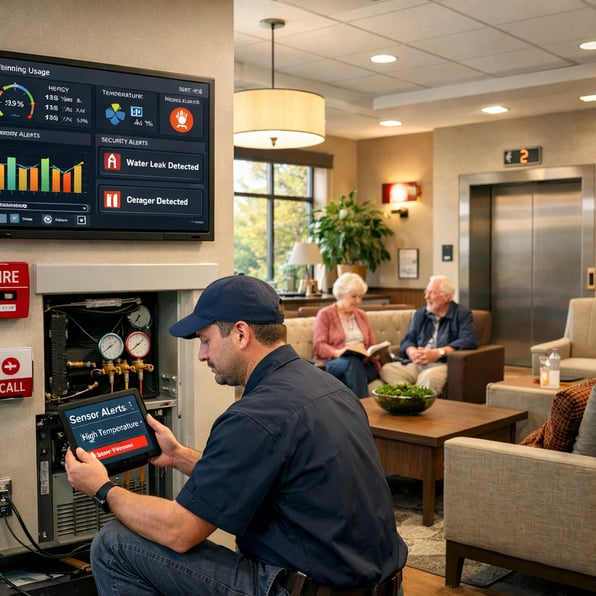
It starts with Internet-connected (IoT) sensors monitoring equipment like boilers, HVAC units, kitchen appliances, plumbing systems, and emergency call devices. These sensors stream real-time data to a single platform — so teams can see how everything is operating at a glance.
Small inconsistencies get caught early, before residents ever experience discomfort or disruption.
Once data is collected, AI and machine learning models turn it into actionable insight. These technologies examine historical patterns to identify subtle shifts that might signal performance deviations, inefficiency, or potential failure.
Over time, the models adapt and improve. That means fewer surprises, fewer emergency calls, and more chances to fix small issues before they create downtime.
For operators, that predictive insight translates directly into operational efficiency — smarter schedules, better resource allocation, and staff focused where it matters.
When the system detects a potential issue, it can automatically create a work order, notify the right technician, and schedule a repair before the equipment goes down.
Integrating predictive analytics with your work order software ensures quick, organized responses. The right person gets the right alert at the right time.
Benefits of Predictive Maintenance for Senior Living Communities
For senior living communities, AI-driven predictive maintenance isn't just about keeping the lights on — it's about creating a safe, comfortable, and reliable environment for residents and staff.
Continuous monitoring flags potential hazards early — from equipment failure to water leaks — before they affect residents.
When repairs are scheduled before breakdowns happen, elevators keep moving, dining stays on schedule, and residents enjoy a smoother daily experience.
Preventing emergencies cuts costly repairs and surprise expenses. Teams can plan maintenance budgets with confidence.
Reliable systems and detailed maintenance records make inspections easier and keep your community aligned with safety standards.
Fewer urgent calls and a clearer picture of what needs attention means maintenance teams stay organized and focused.
A well-running community simply feels better. Residents notice the comfort, and families see your commitment to quality care.
Common Applications in Senior Living Settings
Predictive maintenance can benefit almost every part of your community. Here are the most common uses:
Sensors track temperature, vibration, and filter life to prevent sudden heating or cooling issues — keeping common areas and apartments comfortable year-round.
Monitoring mechanical behavior detects problems before doors stick or motors fail, ensuring safe, reliable mobility for residents and visitors.
Leak detection keeps a constant watch in bathrooms, kitchens, and laundry areas — stopping small drips before they become costly water damage.
Predictive tools check the health of backup generators, fire alarms, and nurse call systems so they're ready when they're needed most.
Smart monitoring ensures hallways stay lit, doors stay secure, and residents always feel safe moving around the property.
Implementation Best Practices for Operators
Rolling out predictive maintenance doesn't have to be overwhelming. Here's how to do it right:
Assess and Prioritize Critical Assets
Start by identifying the systems that matter most to resident health, safety, and comfort — HVAC units, elevators, kitchen equipment, and emergency call systems. Focusing here first ensures resources go where they're most valuable.
Start Small. Pilot the Most Impactful Areas
You don't need to transform your entire strategy overnight. Begin with a pilot in one building or department to test sensors, workflows, and reporting. Optimize before scaling across the organization.
Integrate With Existing Workflows
Predictive maintenance is most effective when it fits seamlessly into day-to-day operations. Connect monitoring data and alerts directly to your work order systems so staff spend less time toggling between tools — and more time taking action.
Train Staff and Foster Buy-In
Make sure maintenance and operations staff understand how predictive tools support their work rather than complicate it. Provide hands-on training and celebrate early wins to build confidence and engagement.
Monitor, Measure, and Adjust
Predictive maintenance is not a "set it and forget it" system. Regularly review performance metrics, repair trends, and cost savings to fine-tune your approach. As your team and technology evolve, so will your ability to prevent problems before they start.
How Eldermark's Platform Powers Predictive Maintenance
Operators need technology that's both powerful and practical. Eldermark's connected platform helps communities simplify maintenance, improve transparency, and protect resident comfort — all from one place.
Integrates with IoT sensors and equipment systems to collect real-time performance data across your community.
AI-powered analytics detect changes or anomalies early and send notifications to the right staff at the right time.
When an issue is predicted, the system automatically creates a task, assigns it to the right team member, and tracks completion.
Easy-to-read dashboards show maintenance activity, asset status, and performance trends so leaders can make informed decisions fast.
Trend reports highlight repair patterns, maintenance cost drivers, and opportunities for better budgeting — helping you plan for the future.
How To Get Started With Eldermark
Eldermark makes predictive maintenance simple, effective, and aligned with your community's mission. Our team works hand in hand with operators to identify priorities, connect your data, and tailor the platform to your workflow — so you see results fast.
Accurate predictions. Anticipate issues before they happen and keep systems running smoothly.
Stronger cost control. Reduce unexpected repair expenses and plan for maintenance with confidence.
Happier teams and residents. Create a safer, more reliable environment that allows staff to focus on delivering great experiences.
Actionable insights. Access clear dashboards and analytics that guide smarter decision-making across your portfolio.
Ready to see what smarter maintenance looks like? Schedule a demo today and learn how Eldermark's connected platform helps your community operate with fewer interruptions.
Ready to Build Stronger Communities?
See how Eldermark helps senior living operators prevent problems before they start.
Connect with our team and see the platform in action.
Schedule a DemoFrequently Asked Questions
Still have questions about predictive maintenance in senior living? We've got answers:
Predictive maintenance uses real-time sensor data and AI algorithms to monitor equipment condition and alert teams to potential failures before they disrupt residents or staff. Unlike reactive or scheduled maintenance, it catches problems early — reducing downtime, controlling costs, and keeping communities running safely.
AI analyzes patterns in equipment data over time to forecast failures before they occur, automatically triggering work orders and notifying the right technician. This shifts maintenance from reactive firefighting to proactive management — protecting residents and freeing staff to focus on care.
Predictive maintenance systems can monitor HVAC units, elevators, boilers, plumbing, emergency call systems, backup generators, fire alarms, and access controls. Any connected system that affects resident safety, comfort, or daily operations is a candidate.
Senior living facilities spend an average of $12,000 per month on maintenance — and unexpected breakdowns push that figure significantly higher through emergency repair premiums, downtime, and staff disruption. Predictive maintenance helps operators reduce those spikes by addressing issues before they escalate.
Get Awesome Senior Living Content Delivered Straight to Your Inbox!
Posts by topic

.png?width=596&name=Blog%20Part2%20Images-selection%20(3).png)