Senior living leaders cannot prepare for AI simply by looking at technology, data, or business processes. They first need to understand what information clinicians actually need to deliver safe, person-centered care and how that information moves through the organization.
As a nurse who has spent much of my career working at the intersection of clinical care, informatics, senior living, and operations, I have learned that technology rarely solves a problem simply by being introduced. The harder, and often more important, work happens before the technology arrives.
This is particularly true as senior living organizations look toward artificial intelligence. The conversation begins with what AI can do. What can it automate? What can it predict? What can it summarize? What efficiencies can it create? But there is a clinical question that needs to come first.
Do we have the right information, captured in the right way, to support the decisions we are asking AI to help us make?
This is important, because AI cannot identify a clinical concern based on data that an organization is not capturing.
Getting to that answer starts by looking more closely at the clinical information and workflows already in place.
Four Questions to Ask Before AI
1 What Does the Clinician Need to Know?
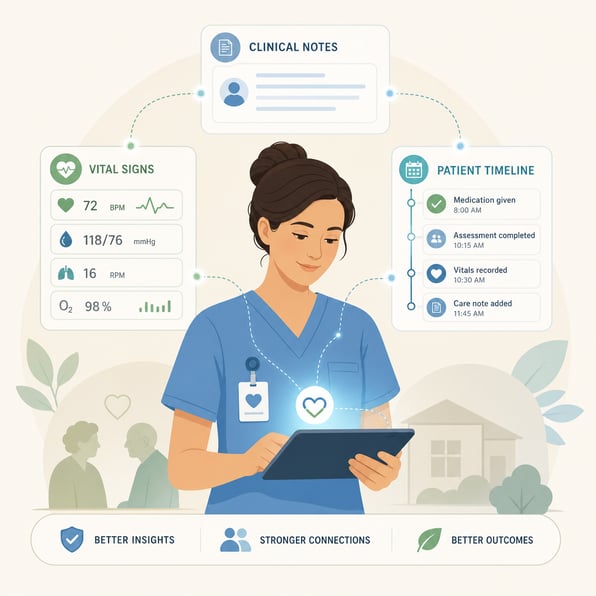
A resident's change in condition doesn't exist in a single data field. A nurse may need to connect relevant clinical information such as weight loss, increased confusion, falls, or shifting sleeping patterns to see the full picture. Vital signs, medication changes, and staff observations are all of clinical significance and are essential for forming a cohesive narrative of the resident's condition. Individually these may not seem significant. Together, they may tell a clinical story.
2 Where Does That Information Come From?
Is it documented in the EHR, buried in a narrative note, captured on paper, communicated verbally, sitting in another system, recorded by a different department, documented inconsistently, or not documented at all? Standardized workflows for data capture are key.
3 Is the Information Reliable?
Having data is not the same thing as having useful clinical information. An organization can have enormous amounts of data and still not have what a nurse needs. More data does not necessarily create better clinical insight. Better information does.
4 Is the Information Moving Through the Right Workflow?
Suppose the organization does capture the right information. Does the nurse actually see it and as quickly as it needs to be seen? Who has the responsibility for acting on it? Does the workflow make the action clear? Information that isn't available when a clinical decision needs to be made is not really supporting the decision.
Now imagine AI.
AI could potentially help identify patterns across all those pieces of information. It might identify subtle changes in condition, surface residents who need attention, summarize a resident's recent clinical trajectory, identify gaps in documentation, reduce duplicate documentation or repetitive administrative work, help prioritize assessments, or bring relevant information together — but only if the underlying information exists and is meaningful.
Clinical workflows are not business workflows.
A broken purchasing workflow might cost money. A poorly designed clinical information workflow can affect recognition of changes in condition, communication, care coordination, clinical decision-making, resident safety, staff workload, and, ultimately, outcomes.
So, when leaders are saying, "We need to streamline our workflows before we implement AI," the question to ask is, "Which workflows?" The ones that matter most may be the ones leaders are not personally experiencing every day. That makes the perspective of the nurses, aides, therapists, medication staff, physicians/providers, and other clinicians delivering care essential to understanding how those workflows actually function.
Leaders don't need to become clinicians to make better technology decisions. But they do need to understand the clinical questions their technology is supposed to help answer. Once we have those answers, only then should you ask, "Where can AI help?"

.png?width=596&name=Blog%20Part2%20Images-selection%20(3).png)