How AI Enables a Values-Based Approach in Senior Living
In senior living, value-based care models (VBC) are changing the conversation about what quality really means. Instead of asking, "Did we do everything on the checklist?", values-based care asks, "Are we supporting residents in living the lives they want?" That shift from activity to meaning changes everything about how care quality is planned, delivered, and measured.
And that's where technology, especially artificial intelligence (AI), can make a real difference. While AI models are often seen as time-savers or automation tools, their most powerful role is as connectors — bringing together resident data, staff observations, and family feedback to create more personal, coordinated care.
Key Insight
At its best, AI gives teams clearer visibility into what matters most to residents — and helps ensure those values guide every decision, conversation, and interaction across your community.
What is Value-Based Care in Senior Living
Care delivery based on value and values shifts the focus from how much care is provided to how meaningful that care truly is. Success isn't measured by the number of services delivered, but by how well those services reflect and support what residents value most — whether that's maintaining independence, staying socially active, or continuing favorite routines.
Healthcare is moving away from fee-for-service models and taking a more patient-centered perspective. It invites collaboration across nursing, wellness, hospitality, and engagement teams, encouraging everyone to work toward shared, person-centered goals.
Challenges Communities Face With Value-Based Care
The heart of values-based care is simple: help residents live according to what matters most to them. But turning that principle into daily practice? That's where things get tricky.
Siloed information: Details about a patient's health, preferences, and personal goals often live in different systems. Without a single view, it's tough for staff to see the whole story.
Communication gaps: Staff, residents, and families don't always share the same understanding of care priorities or progress, which can lead to missed expectations.
Measuring what really matters: It's easy to count tasks completed, but much harder to capture satisfaction, engagement, or overall well-being.
Limited time and burnout: When teams are stretched thin, focusing on residents' personal goals can slip behind the immediate demands of the day.
Keeping it consistent: As staffing or census changes, value-driven initiatives can lose momentum without the right tools and processes to sustain them.
See the platform behind the promise
One connected platform for care, compliance, revenue, and resident engagement.
The Role of AI in Supporting Values-Based Senior Care
When used thoughtfully, AI can help turn the goals of values-based care from a big-picture aspiration into something communities experience every day. It's not about replacing people or clinical best practices — it's about giving teams the insight, time, and tools to deliver care that truly reflects each resident's individual story.
Turning Patient Data Into Personalized Care Plans
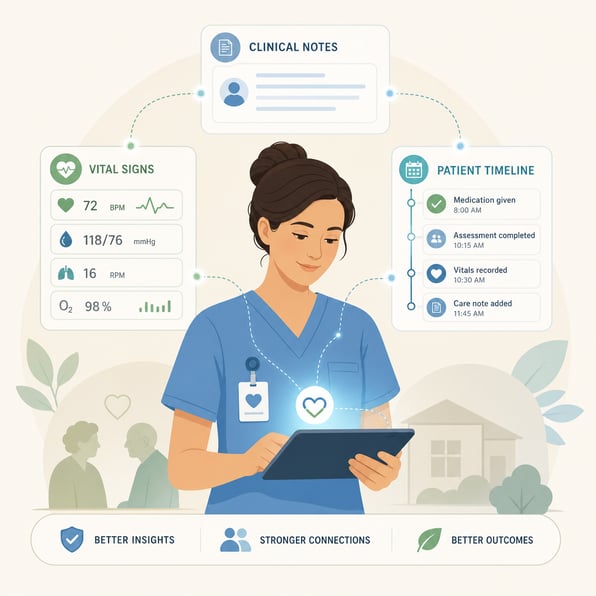
Every resident has their own goals, preferences, and life experiences that shape what "good care" looks like for them. AI healthcare systems can analyze and connect clinical data, progress notes, and family feedback to create a complete picture of each person — helping teams design care plans that reflect who the resident is, not just their clinical needs.
Predicting and Preventing Adverse Events
Sometimes the smallest changes make the biggest difference — a missed meal, less participation in groups, a quieter mood. AI can flag potential issues like increased fall risk, social withdrawal, or medication confusion before they become serious, giving teams a head start on intervention while still honoring each resident's independence and dignity.
Automating Routine Tasks to Free Up Human Connection
Paperwork, scheduling, and reporting are necessary parts of care — but they take staff away from residents. AI tools can take on much of this administrative burden, streamlining documentation and optimizing workflows behind the scenes. The payoff is simple but powerful: AI handles the routine work so staff can focus on the human work.
Supporting Transparent, Two-Way Communication
Residents and families want to feel informed, seen, and involved. AI-driven communication tools keep updates organized, surface trends in feedback, and capture sentiment from messages or surveys — helping care teams respond faster, identify concerns early, and keep everyone involved throughout the care journey.
Measuring Patient Outcomes That Matter
Most reporting systems focus on tasks completed, medications administered, meals served. AI makes it possible to go deeper — giving leaders visibility into engagement, satisfaction, well-being, and quality of life. These insights allow communities to show how care aligns with their mission while continually improving it.
Best Practices for Using AI Responsibly in Values-Based Care
AI should never replace the personal relationships that make great care possible — it should help strengthen them. When senior living communities approach AI with care and intention, it can enhance connection, trust, and understanding across residents, families, and providers.
Here are a few best practices to keep your community's use of AI aligned with its mission and values:
Keep resident values at the center. Choose AI-powered tools that make it easy to record, update, and share each resident's goals, preferences, and priorities across departments.
Prioritize privacy, transparency, and education. Partner with vendors who are open about how AI works and what safeguards protect your data. Provide training that helps clinicians — and families — feel comfortable and confident.
Invite residents, families, and staff into the process. Involve all stakeholders in planning, rollout, and ongoing governance to make sure the technology truly supports community life.
Use AI to amplify, not replace, human touchpoints. Let automation handle repetitive or administrative tasks so caregivers can spend more time connecting, listening, and supporting residents.
Check for bias and accuracy regularly. Review AI-generated insights to make sure they remain fair, inclusive, and relevant to each resident's evolving story. Thoughtful oversight keeps technology people-first.
Built for operators who've seen too many promises
Eldermark is purpose-built for senior living — 30+ years, 2,500+ communities. See what that looks like in practice.
Eldermark's Commitment to Value-Based, AI-Enabled Care
At Eldermark, we believe high-quality senior living care should be both efficient and deeply personal. Our mission has always been to give communities the tools they need to put residents' values at the center of everything they do.
That's why we've built an integrated platform that brings together each resident's story into one connected profile. With this holistic view, healthcare organizations can make clinical decisions that reflect the whole person — not just a single data point.
Our AI-driven analytics and workflow tools help teams anticipate needs, communicate seamlessly, and stay aligned on what matters most. Family portals and messaging features keep loved ones informed and involved in real time. And through it all, Eldermark remains committed to strong data privacy protections, transparent practices, and an evidence-based approach to continuous improvement.
"
We went from spending hours reconciling billing to closing the month in minutes. Eldermark didn't just fix a workflow — it changed how we think about data entirely.
Sarah Mitchell
Director of Nursing · Sunrise Senior Living
How To Get Started with Eldermark
Getting started with Eldermark is easy. Our team works side by side with your community to understand your priorities, streamline data integration, and tailor the platform to fit how your teams already work.
Once everything is in place, we provide hands-on training and ongoing support to ensure staff, residents, and families experience the benefits right away. Schedule a demo today and see how Eldermark can increase revenue, optimize workflows, and create more meaningful outcomes.
Ready to see how technology can bring people closer together? Schedule a personalized demo now and see how AI-enabled solutions can support your community's mission — today and for the future.
Schedule a DemoStill Have Some Questions?
We have the answers.
Value-based care AI in senior living refers to artificial intelligence tools that help communities shift focus from the volume of services delivered to the quality and meaning behind them. Rather than simply tracking tasks completed, AI analyzes resident data, preferences, and goals to ensure care decisions reflect what matters most to each individual — whether that's maintaining independence, staying socially engaged, or following familiar daily routines.
AI improves personalized care plans by connecting information from multiple sources — clinical records, progress notes, wellness data, and family feedback — into a single, unified profile for each resident. This gives care teams a complete picture of the whole person, not just their medical needs, so they can build daily recommendations and care plans that reflect individual goals, preferences, and life experiences.
Yes. AI can monitor patterns across health records, activity logs, and wellness notes to detect early warning signs — such as a missed meal, reduced social participation, or subtle behavioral changes — that may indicate an increased fall risk, social withdrawal, or other emerging health concerns. By flagging these signals early, care teams can intervene proactively while still honoring each resident's independence and dignity.
No. AI is designed to support caregivers, not replace them. By automating time-consuming administrative tasks like documentation, scheduling, and reporting, AI frees staff to spend more time on meaningful human interaction with residents. Emotional support, personal connection, and compassionate care remain inherently human — AI simply helps remove the barriers that get in the way of those moments.
Responsible AI adoption in senior living requires partnering with vendors who prioritize data privacy, maintain transparent practices, and use strong security safeguards. Communities should ensure staff and families are educated on how AI tools work, what data is collected, and how it is protected. Ongoing oversight — including regular audits for bias and accuracy — helps ensure AI remains aligned with each community's people-first values.
Get Awesome Senior Living Content Delivered Straight to Your Inbox!
Posts by topic
.png?width=596&name=Blog%20Part2%20Images-selection%20(3).png)